A Society Bound by Strategic Omissions
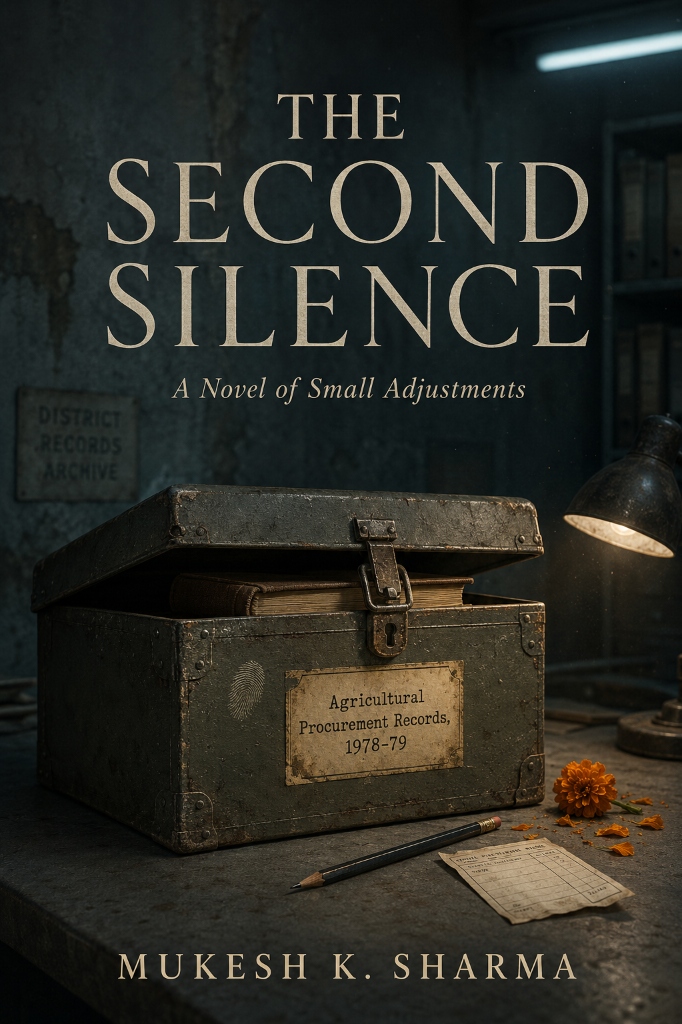
Vairagadh is an administrative state governed not by sudden terror, but by "small adjustments." It is a country where the archives are mathematically perfect, the public servants are quiet, and inconvenient histories are constantly, gently ironed out of the record to maintain an illusion of absolute alignment.
The novel follows a quiet, meticulous archivist working deep inside the District Records Department. When he stumbles upon a small, misfiled folder of agricultural ledgers from 1978, he spots minor, clerical discrepancies. These are not massive falsifications, but minuscule adjustments made to harvest numbers—small margins that occurred right before an undocumented, district-wide famine.
As he begins to ask cautious questions, he finds himself trapped inside a vast, polite bureaucratic machine that values silence above all. He learns that the greatest complicity in Vairagadh is not the original administrative crime, but the "second silence"—the voluntary alignment of everyday citizens who adjust their files, ignore their memories, and remain silent.
SUBJECT: The Census of Omissions
Notice: By order of the General Directorate of Ledgers , all records concerning the rural crop crisis of 1978 are officially cataloged as minor agricultural deficits . Any unauthorized consultation of original ledger sheets or field files will result in the immediate structural deletion of the offending clerk's archives and state privileges. History in Vairagadh is not what occurred, but what the Ledger Office permits to remain.
*Interactive dossier: hover over or tap the blacked-out bars above to reveal the redacted text.*Core Narrative Themes
- Systemic Complicity: How good individuals gradually normalize ethical compromises under state pressure.
- The Mechanics of the Ledger: The account book as a political instrument, where subtraction is more lethal than active hostility.
- The Second Silence: The quiet, horizontal compliance of colleagues and neighbors that makes institutional pressure succeed.
Chapter Excerpt
"The ledgers were bound in green buckram, the same shade as the moss that grew on the damp western walls of the sub-divisional office. They sat on the oak shelves like sleeping birds, heavy with digits checked twice daily. In Vairagadh, a ledger discrepancy was not an error; it was simply a conversation that had not yet been officially authorized to occur."